

Pearce Godwin Talks about the Development of the Bridging Field and Why it Still Matters
Newsletter # 506 - November 17, 2026

by Heidi Burgess
In Brief
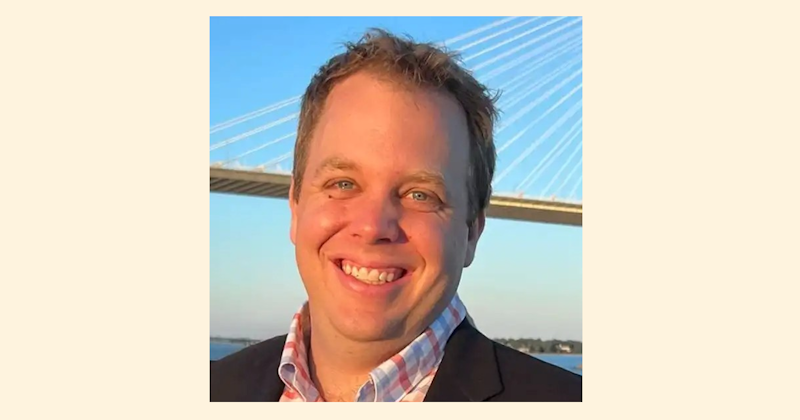
I (Heidi Burgess) talked with Pearce Godwin on October 28, 2026. Pearce is the founder of the Listen First Project and the Listen First Coalition of over 500 organizations working in what has become known as the "bridging field." Two years ago, he stepped away from Listen First to start doing local, place-based bridging work with Urban Rural Action, particularly in his home state of North Carolina, but also elsewhere around the country.
Our conversation talked a lot about why he started Listen First, what it, and the bridging field more broadly, has accomplished, and what the challenges have been. We talked particularly about the challenge of getting conservatives involved in this effort, as generally, they seem to be more reluctant to engage across divides than many progressives are. We also talked about the challenge of making attitude change "stick" after people leave a dialogue and go back to their echo chambers.
We talked a lot about the importance of building relationships across difference, which both allows and results from working across difference to solve local problems. And we revisited the discussion the two of us and others had months ago with David Beckemeyer, about whether, at this point, bridging is simply "fiddling while Rome burns."
Please check out our whole discussion to read/hear the details on these points, and many more.
How Listen First Started
We started our conversation, as I usually do, by asking Pearce how he got into the field, and what spurred him to create Listen First. Pearce was a public policy major, so after graduating he went to work on Capitol Hill for Republican Senator Elizabeth Dole, who lost her seat just four months later. After a couple of years working on various political campaigns, he decided to join Samaritan's Purse, a Christian international relief organization, working in Uganda. This was in 2013.
In Uganda, I was in a place of abject material poverty, but was struck by the incredible relational wealth. And in checking U.S. headlines, I realized that my country was becoming just the opposite: a place of immense material wealth and opportunity, yet relational poverty threatening to tear it all apart.
I channeled my distress [about U.S. politics] into writing a blog post called "It's Time to Listen," and I posted it from an internet cafe in Nairobi the next morning. ... That humble blog post, just calling on Americans to listen first, to move beyond slander and seek common ground, took off. It was published in major papers across the U.S. and elicited a really enthusiastic response. Encouraged by the resonance, and being a millennial, I said, "Let's start a nonprofit," right? I launched Listen First Project to try to do something about it.
Important Statistics
That was in 2013. Polarization (particularly what we call "hyper-polarization") has skyrocketed since then. Pearce shared a whole host of disturbing statistics (and later shared this page with even more statistics).
- Two-thirds of us now actively avoid political conversations with coworkers, friends, or family.
- In a recent survey, "divided" was the word most commonly chosen by Republicans, Democrats, and Independents alike to describe America today.
- 80% of Republicans and Democrats believe that the other party, "poses a threat that, if not stopped, will destroy America as we know it."
- 40% of both Republicans and Democrats say members of the opposing party lack the traits to be considered fully human.
- 77% of us have few or no friends on the other political side. (He then quoted Monica Guzmán as saying "Whoever is underrepresented in your life will be overrepresented in your imagination. Instead of people, you'll see monsters."
But he also shared some more hopeful statistics:
- 87% of Americans surveyed say they're tired of division and agree that polarization is a threat to the United States.
- More than 80% of us say our success as a nation depends on our ability to work together.
- 80% also say, "political leaders should compromise with the other party to get things done, even if they don't like some parts of the compromise." And that view is shared by at least 75% of Republicans, Democrats, and Independents, compared to only 18% who say "political leaders should stick to their beliefs and avoid compromise, even if little gets done."
- And 84% say that the U.S. is stronger as a nation because it has people from different races, religions, and cultures.
- 80% agree that, "everyone, regardless of their views, has the right to free, nonviolent expression."
- Finally, 83% say, "it is never okay for people to use violence to achieve a political goal."
Listen First's Mission
In 2017, four years after his "Time of Listen" blog post, Pearce discovered that other people and organizations were thinking similar things. So he formed the Listen First Project and The Listen First Coalition with four other organizations. Today there are more than 550 organizations in the coalition. As Pearce explained,
The Listen First Project came to understand ourselves as serving as the backbone organization for the [bridging] movement. That's jargon from collective impact theory, and there are some great cases in other movements and causes over the years. As that backbone organization, the Listen First Project has sought to build community and coordination, to amplify hope and opportunity, and to assess impact.
He went on to explain that:
The North Star of the bridging divides movement — which was established by the Bridging Movement Leadership Council three or four years ago — is that we will thrive as a nation because of our ability and willingness to work together across differences.
Getting Conservatives Involved
Since the majority of the people working in the bridging movement are either left-leaning or independent, we (Guy and Heidi) have not had the opportunity to talk to many people who are openly right-leaving. I asked Pearce about that, particularly about the observation made by many of our colleagues, that it is hard to get conservatives to engage in cross-party dialogues or to do this kind of work. He talked about an article he wrote for the Chronicle of Philanthropy: "You Need Conservatives. Here's How to Engage Them in Your Mission."
First, he explained why that is often true:
- Conservatives tend to believe in different change agents than liberals. Just to explain that a bit: as a conservative, I might be more interested in the market or my faith community, whereas liberals are perhaps more interested in government and the nonprofit sector. So, a nonprofit leader showing up is automatically going to lead to a bit of suspicion, just because conservatives tend to believe in different change agents.
- Conservatives tend to have a tighter circle of concern. [He credited Liz Joyner at Village Square for pointing this out.] Maybe they've got their church small group, their Rotary club, their traditional nuclear family, and they're just like, "I'm good. I'm not feeling a need for new friends or to meet strangers." ... As opposed to a liberal perspective traditionally having a more global — a more broad-based concern.
- Conservatives tend to distrust and suspect what the social activists are selling.
- Also, conservatives often feel marginalized, misunderstood, harshly judged, looked down upon — I'd say culturally marginalized, and canceled, if you will, in recent years. ... While we might not have experienced it, what I hear again and again from my fellow conservatives is, "I feel burned from this one time that I tried to have a conversation, and I was harshly judged, looked down upon, called this, that, and the other epithet." That matters.
- And then, finally, conservatives hear liberal signals — i.e., language — a mile away, and often run the other direction.
Then he shared a list of ways to get around these obstacles, noting that the Chronicle of Philanthropy article has a paragraph or two on each one of these.
- First, embrace humility.
- Second, demonstrate real curiosity in and appreciation for what conservatives bring to your mission, if you're not a conservative yourself.
- Invite conservatives to actively help achieve goals you share and co-create solutions to problems they care about.
- Don't seek agreement on issues unrelated to the mutual goal; those litmus tests or purity tests are not necessarily going to be helpful to the mission at hand.
- Make your mission relevant to a tighter circle of concern, understanding that those of us who are conservative tend to see that tighter circle of concern as more salient and of interest to us.
- Avoid words that close down the opportunity to connect. Connect on values that tend to be especially salient for conservatives.
- Find and cultivate ambassadors — I love to call these trusted validators — somebody of that group that is not your own [for progressives, find a conservative] who can vouch for you.
- And my final piece of advice is to get uncomfortable and meet conservatives on their turf.
Doing all these things is hard, he acknowledged, but also essential.
if we look at our field [the bridging field] and our participants, there can be some glaring gaps at times. Whether it's from a moral perspective or a pragmatic perspective, that's just not going to cut it. And again, at worst it could make the very problem we're trying to solve worse, if we become our own little choir, our own homogeneous little tribe that itself can take on those us-versus-them dynamics that are so hard for all of us to suppress, because we're human.
Other Challenges
While many people understand that, and are taking steps to prevent it, Listen First's national campaigns have not attracted as many people as they hoped.
I've seen that many people distrust invitations to bridge divides, ... that's especially true of my fellow conservatives, in addition to other demographic groups of our fellow Americans. Certainly violence is increasing. Some of the most active in our politics and culture have turned their backs on America's founding vision of prospering as one, and instead focus on destroying the other.
And finally, on the humbling side of the coin for me, many of our fellow Americans have lost hope for a way out.
We also talked about the challenge of maintaining gains made in dialogue processes. People typically come to these processes, where, as Pearce puts it, "the magic happens" and their attitudes about "the other" are measurably transformed. But if they go home to their usual echo chambers, the transformation often doesn't last. They go back to their old negative views of and behavior towards "the other," as if the dialogue hadn't happened. To change this, Pearce said, we need to change the culture, to value and practice bridging often, not just once.
Sources of Hope
On the hopeful side, the "bridging movement," as Pearce calls it, has been growing rapidly. The Listen First Coalition grew from 4 to 550, and that, Pearce says is
only the tip of the iceberg. I'm much more encouraged by the fact that there's a wellspring of efforts toward peace and unity in communities, places of worship, classrooms, and workplaces across America. If you believe that America is a country worth fighting for, and that the only way forward is together, you are not alone.
Another point of hope for me is that we've measured real personal impact on those who participate in bridging initiatives.... We see that when people come to that proverbial table, the magic happens. I think it's how we're wired. It's that reciprocal nature of a human interaction; that thing is deeply ingrained in us.
But, he pointed out, both his experience and mounting research shows that people are more likely to be willing to talk to and work with people who are different from themselves if they have a common goal they are working towards. While people generally aren't eager to sit down with people from "the other side" just to talk, all demographic groups are open to opportunities to "work together to fix things we agree are broken."
Going Local
This is happening increasingly often at the local level, Pearce explained, because
change moves at the speed of trust, and trust moves at the speed of relationships. Meaningful relationships, especially across differences, develop best when people are in proximity to one another. This is just a thing we know, as humans who have lived on this planet. But with the forces of toxic polarization making us feel further and further apart, finding literal common ground — like a shared neighborhood, town, or county — can be an increasingly effective starting point for this work. ...
I've gotten a lot of hope from seeing meaningful transformation at the local community level. As my friend Daniel Stid has observed, on the one hand, our national politics and governing institutions continue to spiral downward in a doom loop of polarization, dysfunction, and delegitimization. On the other, we can observe green shoots of promise and pluralism in many communities across the country, as Americans join forces to tackle challenges they face. ...
I think local work is also more insulated from the outrage industrial complex that's running rampant at the national level. I find that caricatures of other people promoted by cable news and social media are much more likely to ring hollow if you actually know those other people by name. I think polarizing issues become less frightening when you're working across divides to fill potholes in your own local community.
Urban-Rural Action
Seeing that trend, Pearce recently stepped down from acting as CEO at Listen First, and joined Urban Rural Action in January of 2025 because, he very much appreciated their local work, which is community-led, action-oriented, genuinely welcoming of divergent perspectives, and very importantly, in Pearce's view, fun!
For those who may not know, Urban Rural Action is a place-based national nonprofit organization working in communities around the country, bringing Americans together across divides to tackle urgent local problems. Our Uniting for Action local hubs empower communities to increase social cohesion, boost civic participation, and strengthen local institutions — in short, to make communities safer and stronger. In those local hubs, three things happen. Uniting for Action programs bring Americans together to solve problems across differences where they live. Community workshops in third spaces strengthen civic participation skills. And finally, community leadership labs — we call them co-labs — equip local leaders to work collaboratively and make institutions more responsive.
Is Bridging Fiddling as Rome Burns?
Going back to his thoughts about the need for and efficacy of bridging work, I brought up a conversation Pearce and I and others had in our newsletter, addressing David Beckemeyer's question about whether bridging was simply "fiddling while Rome burned." Pearce responded:
my answer to that is similar to what I'm thinking around local and national: I think there's a both/and. I hope I was never so arrogant — I'm certainly not now, after all that I've experienced, and the scars from seeking quicker or more rapidly scaling solutions to this problem — I absolutely do not think that bridging divides is the be-all and end-all.
What I do think is that bridging — what you might think of as the social and cultural repair — is critically necessary, but insufficient. I think institutions, structures, and incentives are critical as well. As you recently wrote in Newsletter 501, you talked about the four simple, fairly obvious rules that could help a lot with that tit-for-tat positive feedback loop — which, as you pointed out, is actually negative — the escalating reactions. And in those rules, your last one was "refuse to demonize," right? And I think that is absolutely mission-critical.
I've heard the arguments, and I love and respect many of the people who have determined that bridging is too bottom-up, that it's too soft. I certainly respect that passion. I tend to start and often end from a pragmatic perspective. I just don't know how we can possibly move forward together as a nation by further fracturing ourselves.
Other topics that are covered in the full interview include more about the nature, causes, and threats of what Pearce calls "toxic polarization" and we call "hyper-polarization;" whether that polarization is worse at the national level than the local level (and why); and what it is really going to take to bring America back together again.
Please Contribute Your Ideas To This Discussion!
In order to prevent bots, spammers, and other malicious content, we are asking contributors to send their contributions to us directly. If your idea is short, with simple formatting, you can put it directly in the contact box. However, the contact form does not allow attachments. So if you are contributing a longer article, with formatting beyond simple paragraphs, just send us a note using the contact box, and we'll respond via an email to which you can reply with your attachment. This is a bit of a hassle, we know, but it has kept our site (and our inbox) clean. And if you are wondering, we do publish essays that disagree with or are critical of us. We want a robust exchange of views.
About the MBI Newsletters
Two or three times a week, Guy and Heidi Burgess, the BI Directors, share some of our thoughts on political hyper-polarization and related topics. We also share essays from our colleagues and other contributors, and every week or so, we devote one newsletter to annotated links to outside readings that we found particularly useful relating to U.S. hyper-polarization, threats to peace (and actual violence) in other countries, and related topics of interest. Each Newsletter is posted on BI, and sent out by email through Substack to subscribers. You can sign up to receive your copy here and find the latest newsletter here or on our BI Newsletter page, which also provides access to all the past newsletters, going back to 2017.
NOTE! If you signed up for this Newsletter and don't see it in your inbox, it might be going to one of your other emails folder (such as promotions, social, or spam). Check there or search for beyondintractability@substack.com and if you still can't find it, first go to our Substack help page, and if that doesn't help, please contact us.
If you like what you read here, please ....





