

Bobby Milstein talks about the Power and Promise of Shared Stewardship and Thriving Together
Newsletter # 504 - November 9, 2026

Heidi Burgess and Guy Burgess
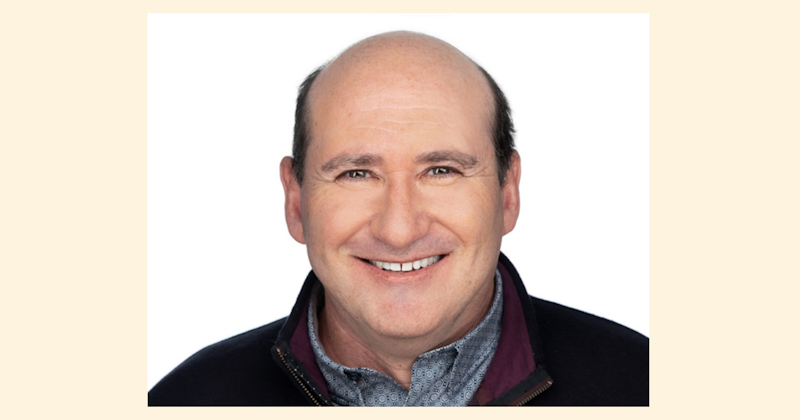
I (Heidi Burgess) talked to Bobby Milstein on October 21, 2026. Bobby directs system strategy for ReThink Health and the Rippel Foundation; he is also a Visiting Scientist at the MIT Sloan School of Management. Before that, Bobby spent 20 years planning and evaluating system-oriented initiatives at the Centers for Disease Control and Prevention (CDC), where he was the principal architect of CDC’s framework for program evaluation. With an educational background that combines cultural anthropology, behavioral science, and systems science, he concentrates on efforts to spark large-scale institutional and cultural change. He works with innovators who see themselves — and others — as shared stewards in a movement for well-being and justice.
A through line of interest of his is the role of "inside changemakers: people inside their own families, inside their own organizations, inside their own systems." He has been interested in learning how we can be "individuals, but part of a full society, and how we can be healthy at every level of that" This led him to questions about systems, and "how we can be better stewards of the systems that shape our lives together."
Our discussion revolved around that question, focused on the notions of "thriving together" (what that means and how we can reach that goal), and "shared stewardship," a powerful approach to help individuals, organizations, and networks thrive.
We started our conversation on the notion of "Thriving Together." Bobby developed the notion of "thriving" when he was at the CDC:
We want to be in experiences and places where we thrive. Maybe that goes by other labels — health or flourishing or prosperity — but "thriving" is a pretty plainspoken word for the state of being that a lot of people really value and want. And it's contrasted against other states of being that, all too often, I and so many others find ourselves in sometimes, when we are struggling or suffering.
So, a lot of the work that I've done throughout my life has been about how we move ever closer toward those states of being that we really value, and how we move away from those things that are really marked with adversity and deep pain. A colleague of mine in this work, Gary Gunderson, says that healing flows to the points of pain, which means, even in really dark times, even in moments of great adversity, there is the possibility of healing. There's the possibility of moving forward. And so, where we are moving toward is something to orient our work around.
The notion of "thriving" also provided an antidote to fragmentation and "disorientation."
So many efforts in the world are designed around a program or a project, and other people are doing their programs and projects, and somehow it's supposed to add up to a better system. Very often that work is really meaningful and impressive, but it rarely adds up to a better system. It often creates a lot of fragmentation and disorientation: [People wondering] what am I doing, and with whom, and where, and why?
It really helps, Bobby explained, if everyone can agree on one big goal or "North Star."
“Thriving together” was increasingly the simplest way of saying it. We heard it over and over again from colleagues doing this work when we asked: “What's the big "why" behind why you're working on changes in our economy, or our food systems, or transportation, or housing, or health care, ...what it is that you're trying to do with that work? And through the cascade of whys, eventually it just got to be so simple. It's like, well, we're doing it to thrive together. We want to live in a world where I can thrive, and other people can too.
That two-word North Star ended up being the most unifying, plainspoken, humane way of describing the "big why" that motivates so many of us in this work. And it's extra helpful that the orientation around thriving together is easily distinguished from moves in other directions that are maybe marked with some people thriving, but many others struggling and suffering. And that's a future we don't want to see.
| That two-word North Star ["Thriving Together"] ended up being the most unifying, plainspoken, humane way of describing the "big why" that motivates so many of us in this work. |
I asked Bobby if he'd gotten push back from people who are so angry about their life, or the current state of affairs in America, that they cease to be interested (or maybe weren't ever interested) in thriving together. Rather, they are interested in winning, in defeating the other side.
Bobby responded that it is true, we are
far from where we want to be, and maybe even headed in another direction. There is a widening sense of dissatisfaction with the status quo, and more and more people who are saying, "This is not the kind of world that I want to live in. It's certainly not the kind of world that I want to pass on to future generations." There's skepticism when we look at the future, or anger, or hopelessness. ...And for many, that can turn into outrage or apathy.
I think the issue is how we channel those feelings. Sometimes it's not experienced emotionally, but analytically. There are a lot of good reasons to say we're not on the right course. But how do we convert that into constructive action that brings people into an orientation around this work that feels like we're turning away from the doom loop? Not exhausting ourselves with ever more diagnosis of what's wrong, but ultimately bringing together the means and ends that help us escape that doom loop and move decisively toward a future that is different.
Another part of the challenge, Bobby said, is to look for alternatives to our current trajectory, "and to embrace those alternatives in ways that don't perpetuate the us-and-them dynamics that we've got now, or the narratives about winners and losers." Historically, Bobby pointed out,
Our worlds have never been set up for everyone to thrive. It should be no surprise that we find a lot of people struggling and suffering, and there are many reasons to believe that that adversity can get even worse. So. it becomes a disciplined practice to look for those alternatives that are unifying, that bring our values for connection and contribution together, and to find pathways that work for virtually all of us.
Much of the work of thriving together, Bobby pointed out, revolves around
Returning to some of the norms that have allowed human communities to thrive from the beginning. If we didn't have the capacity to care for each other, and to be connected, and to elicit contributions from everybody, we would never have evolved as a social species, in connection with an environmental home where we, too, are interdependent with the places that we live.
The notion of "shared stewardship," Bobby explained is closely linked to breaking down fragmentation.
Shared stewardship is quite important, because the way that we can escape the worrisome, alarming path that we're on and move in a different direction is through the practice of more intentional interdependence: by discovering that we are stronger together, and that when even one more person feels they belong, even one more person is valued for what they bring, together we can end up doing things that we could never do alone.
So, the practice of shared stewardship is itself a way of flipping the script on scarcity and abundance, or us-and-them narratives, to discover that that has never really been true. What we've lost touch with is the norms and practices — even the visibility of stewards in our lives. To me, that's one way that we can accelerate this shift from fragmentation to interdependence: just by starting to think and act like shared stewards together.
| That's one way that we can accelerate this shift from fragmentation to interdependence: just by starting to think and act like shared stewards together. |
The role and identify of "steward" has ancient roots, Bobby, explained, but it is much less visible or valued in our present day. But if you go looking for stewards, Bobby noted, you can find them everywhere. They are in every organization and every community:
They are the people who have ways of thinking and acting that connect across difference, that expand opportunities where they don't exist, and they learn and adapt in very remarkable ways. It's not usually a skill set that people learn in school, or certainly rarely on the job. But they are those people who can stay human in very dehumanizing times and dehumanizing situations. They are the glue, and they bring the love and the healing into situations that are fraught with major challenges of division and adversity.
So, the first step in recognizing that we can strengthen shared stewardship — and that it can propel us toward a future where we thrive together — is to recognize that there are [already] stewards all among us, and it's actually quite an abundant asset. That's really good news. If you're not paying attention to it, and you're feeling skeptical about how we are ever going to address the challenges we face, the answer is: we are already a bigger "we" than we think. ...
So when we think about alternative futures, ...[we need to realize that] a lot of those futures are in our own hands. It's a question of whether those hands join together and pull us into a future that we know we need to create together, versus those hands doing small things in separate ways, with lots of people on the sidelines wringing their hands and saying, "Oh my God!" Those are not the conditions in which we can make decisive moves in a better direction.
| So when we think about alternative futures, ...[we need to realize that] a lot of those futures are in our own hands. It's a question of whether those hands join together and pull us into a future that we know we need to create together, versus those hands doing small things in separate ways, with lots of people on the sidelines wringing their hands and saying, "Oh my God!" |
For me, and for many colleagues in this work, that, alone, is an energizing idea: that we are very close to being able to do many of the things that would be in widespread interest. We just have to think more like organizers than administrators or managers.
I asked Bobby to give us some examples of stewards we might not be noticing. He talked about Be Well Palm Beach County, which was formed in response to the Parkland school shooting. The surrounding communities came together after that tragedy, realizing that they needed profound community change to recover. Interestingly and importantly, that initiative showed that, while stewardship is not usually taught in schools or on the job, it can be learned. The citizens of Palm Beach County together learned how they could be shared stewards of their well being, and created a thriving community out of deep tragedy.
We talked more about the difference between stewardship and other kinds of leadership. Bobby explained:
The practices of shared stewardship became very easily identified when we looked at colleagues across the field.... You can see very clear patterns of mindsets and practices, even in stewards who don't see themselves in those words or couldn't articulate it for you. But when you observe how they're working, it's quite obvious how they're able to: listen to unheard voices, or weave vested interests together, or change a storyline to point out multi-solvers, or bridge time horizons, to focus on our legacies of the past and the future, legacies that are just and unjust. Or maybe they're really good at using data to chart progress and really question what our next move is. ... So those things now open up a new horizon of how we learn and deepen this as a norm.
Stewardship can be practiced at three levels, Bobby explained. It can be practiced individually -- in one's interpersonal relations. It can be practiced in organizations. And it can also be practiced across networks.
Very often, we find that individuals have a much more developed practice of stewardship than the organizations they're a part of. So, our organizations inhibit us in many ways, and detach us from the habits and mindsets of stewardship. ... [But] If you work in and through those three levels — individually, organizationally, and across a network — then new norms can start to take hold really quickly, so we can start working together. Because the expectation is that we're going to connect across difference as a norm. We're going to expand opportunity where it doesn't exist as a norm. We're going to learn and adapt, rather than pretend there's one and only one way to do this work.
They ended up identifying 15 key practices, grouped into three sets: connecting across difference, creating transformative opportunities, and learning and adapting. The full list of practices is available on the Rippel website.
We also talked about the related idea of courageous citizenship, and how citizenship can be seen as a "vending machine" or a "barn raising." With vending machine citizenship, we pay our taxes, and we expect goods and services to be delivered in return, without us doing anything else. With barn raising citizenship, we all chip in to build the barn (or the community) together, and everyone benefits.
If the dominant metaphor of society is that we are individuals, we pay taxes, and the government — or maybe professionals — delivers services, that strips away much of what I think a lot of us would say is a necessary feature of living life in a commonwealth. ...
| If the dominant metaphor of society is that we are individuals, we pay taxes, and the government — or maybe professionals — delivers services, that strips away much of what I think a lot of us would say is a necessary feature of living life in a commonwealth |
If you're expecting a vending machine and it's not working, you could start kicking that vending machine, and ultimately that's going to break your foot, and then you can't afford to go to the hospital. So, kicking the vending machine can only go so far. Eventually, you're going to have to say: if what this vending machine is holding is something important to me, then we're going to have to build it outside of the locked gatekeeper of the vending machine, because the gatekeepers and those who hold the purse strings over the assets of our lives aren't delivering.
Our conversation then turned to the report that Rippel recently related with Gallup entitled "Thriving Together in America," which starts out with a set of troubling statistics. For instance, it shows that fewer than 50% of Americans see themselves as "thriving." Drawing text from page one of the report,
Americans’ wellbeing has declined since reaching a post-pandemic peak five years ago, using Gallup's Life Evaluation Index to track how people assess their lives today and expect their lives to look five years from now. Key findings reveal that national wellbeing has fallen to levels not seen since the Great Recession and the early months of the COVID-19 pandemic, with young adults driving the steepest decline of any age group and a growing share of Americans now classified as suffering, rather than thriving or struggling.
But the report is not, by any means all bad news. As Bobby explained:
[The report is a] a compilation of insights from many sources and many contributors that equip us all to be better stewards of the things that we value. To be sure, this is a very high-stakes situation that we're in. And the reason that we and so many people contributed to this report together was because we're not all connected with the knowledge and tools and information that we need to be the best stewards that we can be.
The report has a number of insights from the decades of tracking that Gallup has done so remarkably. But it's also coupled with profiles of more than a dozen communities that are organizing around well-being. In some ways the statistics about who's thriving and struggling and suffering are not good news, but the fact that there is so much organizing underway — and more and more of it, which is beyond the scope of the report — really offers insight into how we can escape this escalating challenge. But you're absolutely right that the data are troubling. Well-being in America is low and falling fast. But those data are not our destiny.
When I asked how "thriving" is measured, Bobby explained that it is a very simple two-question poll, based on the metaphor of a ladder. Gallup asked:
Imagine a ladder, with the lowest rung being your worst possible life and the highest being your best possible life — a ladder that goes from zero to 10. Where do you stand today on this ladder of your life? ... [and] Where do you expect to stand five years from now?
So, you mix this current life evaluation and your anticipated life evaluation and bring them together. People who are consistently high in the present and in the future are thriving. People who are low at both the current and the future are suffering. And folks who are in the middle are struggling.
It's a very simple way of measuring well-being, but it has been shown to track well with other measures: health care utilization, premature death, workforce productivity, depression. "Pick your issue area," Bobby said, "its often strongly related" to just these two questions.
We're out of space here, but you can watch/listen to or read much more about the report, what it means, how the notion of shared stewardship can spread, and why it gives Bobby optimism that there really is a way out of the current predicament we are in in the full video and transcript.
Please Contribute Your Ideas To This Discussion!
In order to prevent bots, spammers, and other malicious content, we are asking contributors to send their contributions to us directly. If your idea is short, with simple formatting, you can put it directly in the contact box. However, the contact form does not allow attachments. So if you are contributing a longer article, with formatting beyond simple paragraphs, just send us a note using the contact box, and we'll respond via an email to which you can reply with your attachment. This is a bit of a hassle, we know, but it has kept our site (and our inbox) clean. And if you are wondering, we do publish essays that disagree with or are critical of us. We want a robust exchange of views.
About the MBI Newsletters
Two or three times a week, Guy and Heidi Burgess, the BI Directors, share some of our thoughts on political hyper-polarization and related topics. We also share essays from our colleagues and other contributors, and every week or so, we devote one newsletter to annotated links to outside readings that we found particularly useful relating to U.S. hyper-polarization, threats to peace (and actual violence) in other countries, and related topics of interest. Each Newsletter is posted on BI, and sent out by email through Substack to subscribers. You can sign up to receive your copy here and find the latest newsletter here or on our BI Newsletter page, which also provides access to all the past newsletters, going back to 2017.
NOTE! If you signed up for this Newsletter and don't see it in your inbox, it might be going to one of your other emails folder (such as promotions, social, or spam). Check there or search for beyondintractability@substack.com and if you still can't find it, first go to our Substack help page, and if that doesn't help, please contact us.
If you like what you read here, please ....





