

Gideon Lichfield Talks About Journalism, Tech, Democracy, and How To Do Them All Better
Newsletter #450 — April 30, 2026

by Heidi Burgess
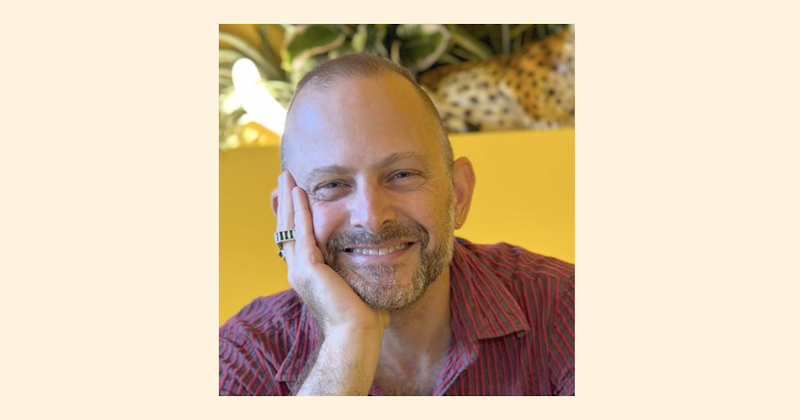
On March 16, 2026, Guy Burgess and I (Heidi Burgess) talked to Gideon Lichfield. Gideon is a journalist and expert in tech and democracy. Currently, he is with the Harvard Ash Center for Democratic Governance, but in the past he was the Editor- in-Chief of Wired and MIT Technology Review. He also has a fascinating Substack, Futurepolis.
Go to the Transcript and Video of this Interview
We started our conversation with Gideon, as we often do, by asking him to tell us his story — what he is doing now, and how he got there. He started work as a science writer at The Economist, during which time he traveled from one foreign bureau to another, first Mexico City to Moscow to Jerusalem, and then to the U.S. Then he went to MIT Technology Review and then to Wired.
="" a="">For a short video explaining some of these possibilities more, see Gideon's talk Democracy 2040: A vision of the future. (Spoiler: it's wonderful!)
We also talked about how many people aren't receptive to the idea that we need to "save democracy," because they don't see it as a system that works for them.
So much of the Democratic Party's messaging around Trump was, "He's a threat to democracy." And there was a kind of finger wagging about it, I think, a kind of, "You'll miss democracy when it's gone." But nobody tried to explain why.
Or they tried to say, "Authoritarianism is bad." But the reason that that didn't work, I think, is that people understood that authoritarianism is bad, but nobody was convinced that what we have, what we call "democracy," is significantly better.This goes back to what I was saying earlier. First of all, it's a "so-called democracy." People don't feel like it really is representative of them. A lot of people have been left behind, and that's what Trump tapped into. Manufacturing was offshore, and rural communities were abandoned, and social safety nets were weakened. And all of these factors meant that a large part of America's population was left behind. You could say that that wasn't because of democracy. It was because of bad policies. It was because of the neo-liberal consensus. And all of that is true.
But what it meant was that people thought, "Well, okay, the supposedly democratic process is supposed to lead to better outcomes, because it allows the most competitive or most valuable ideas to surface. But it hasn't worked for us. It hasn't achieved the social benefits that it should have. It hasn't achieved widespread prosperity."
And then people obviously got worked up about other issues like immigration that Trump tapped into very well. And so democracy, as a concept, had no value. And the people who were promoting democracy, like those funders or like the Democratic Party, just forgot and lost sight of that. They didn't understand that. They took it for granted that people thought democracy was a good thing.
So, how do you convince people democracy is a good thing?" I don't think it helps to say, "You'll be sorry when democracy is gone." And it's not fixed by giving people a civics class and trying to explain to them why it matters. So what is it? That's a little harder to answer.
I think what the pro-democracy forces... need to form a grand narrative, a meta-narrative, about democracy, not as a kind of a bulwark against authoritarianism, but as something positive that actually brings you benefits. And they need to make the case for how it can do that. And I think that narrative has to tie in somewhat to what kinds of values we want to have as a society, what prosperity means, what freedom means. ... They have to tell the smaller stories that give people a sense of belief in democracy, not by talking explicitly about "this is democracy and it's good," but by showing examples of democratic practice. They need to show examples of local communities coming together to solve difficult problems, show examples of people fighting against an unfair system, overturning power and giving the people more of a say and that coming out better for people. So stories that turn this abstract idea into felt, lived personal, concrete experiences.
Since Gideon is a journalist, we also talked about journalism. I asked him, "But how do you do journalism when a) people don't trust the media, and b) people don't think there are such things as facts. Gideon reworded my question.
I think the question is, "how do you create demand for journalism that is based on facts?" ... I think that there is a case to be made that when you bring local communities together around a shared problem, and that could be a zoning question, or it could be problems of water quality or homelessness or some other issue that affects the local community. If you can create the forum where people from across the community from different political backgrounds come together, recognize the problem that they have to solve together, are given tools for solving it together, then they also are going to need sources of information that everyone in that group can agree to trust. And local media can play that role.
And so the question is, how do you pull all this together? How do you create those local forms of shared deliberation, that sense of shared problems, and then shared information sources? And there are some projects around the country that are trying to do that. I'm going to visit one later this month called Civic Lakes in Lexington, Kentucky, where they have done a bunch of work where they are simultaneously holding community events. They're holding a local civic assembly. They provide local journalism and reporting on city council. They provide explainers. They fund block parties. They fund art events. They kind of do all of these different kinds of stitching together the local community in different ways and adding a layer of local journalism. So that there is a trusted information source that everyone can share in. That's what I mean by creating demand. You have to make people want a source of information they can all trust in order for you to be able to then produce that source and then do it in such a way that they can trust it. ...
So that problem of trust is based, in some sense, in the media catering to the audiences it was serving and those audiences having a certain political leaning. ...The business model requires them to serve the audiences that they have. And so in part, you could say it's not their fault, because it is a function, a product of the way that urban and rural communities have shifted politically. But the media also, I think, were unaware of this. The mainstream media were very bought into this idea that they do objective journalism and that they just report the facts. And it's part of the mythos of how American journalism works. And it lost sight of the extent to which what they chose to cover is shaped by who they're reporting to, who they're reporting for. So, I really struggle with this idea of journalistic objectivity. I don't think objectivity exists. You can do journalism in a very fair and fact-based way. You can go and seek the information and track down the sources and balance the information and try and give the fairest account that you can. But what you choose to cover, what you consider important, what you privilege, what you ignore, that is very much a function of your biases or the preferences of the population that you're serving. And so it can be very easy for that coverage to skew, not in terms of its factuality, but in terms of what it considers important. And I think that is what produces the sensation that the media has a liberal bias.
As always happens with our interviews, we are out of space here. We talked more about how to create a compelling story to drive support for democracy, the role of journalism in crafting and spreading such messages, how journalists need to relate to, work with, or even in a sense, become "influencers," because those are the people who do actually have influence, and what the role of AI is in all of this. And more. It is a great discussion, so we hope you will read or watch it!
Please Contribute Your Ideas To This Discussion!
In order to prevent bots, spammers, and other malicious content, we are asking contributors to send their contributions to us directly. If your idea is short, with simple formatting, you can put it directly in the contact box. However, the contact form does not allow attachments. So if you are contributing a longer article, with formatting beyond simple paragraphs, just send us a note using the contact box, and we'll respond via an email to which you can reply with your attachment. This is a bit of a hassle, we know, but it has kept our site (and our inbox) clean. And if you are wondering, we do publish essays that disagree with or are critical of us. We want a robust exchange of views.
About the MBI Newsletters
Two or three times a week, Guy and Heidi Burgess, the BI Directors, share some of our thoughts on political hyper-polarization and related topics. We also share essays from our colleagues and other contributors, and every week or so, we devote one newsletter to annotated links to outside readings that we found particularly useful relating to U.S. hyper-polarization, threats to peace (and actual violence) in other countries, and related topics of interest. Each Newsletter is posted on BI, and sent out by email through Substack to subscribers. You can sign up to receive your copy here and find the latest newsletter here or on our BI Newsletter page, which also provides access to all the past newsletters, going back to 2017.
NOTE! If you signed up for this Newsletter and don't see it in your inbox, it might be going to one of your other emails folder (such as promotions, social, or spam). Check there or search for beyondintractability@substack.com and if you still can't find it, first go to our Substack help page, and if that doesn't help, please contact us.
If you like what you read here, please ....





