

Terry Kyllo Talks about Paths to Understanding Between All Peoples
Newsletter #443 — April 6, 2026

by Heidi Burgess
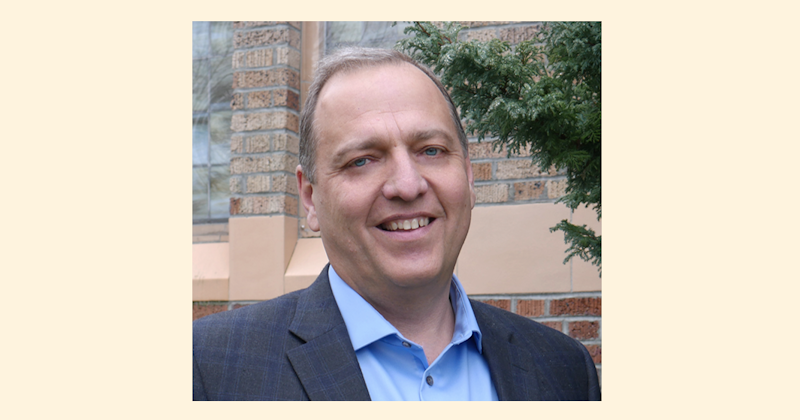
I talked with Terry Kyllo, the Executive Director of Paths to Understanding: Gathering Neighbors, Growing Trust. located in Lynnwood, Washington, on March 18, 2026. Terry is passionate about renewing civil society and democracy by helping communities build trust across deep divides—because he believes we are living too divided, and we do not have to live this way. A Lutheran pastor, Terry works with local groups (faith-based and otherwise), media, and public leadership to bring neighbors back into relationship, to help them build a world where everyone belongs and everyone can thrive.
I started the conversation with Terry, as I often do, asking how he got into this work. He had a moving story.
One of the most important things that happened in my life was that my mother was diagnosed with MS when I was a little kid — when I was about three and a half. And I watched how the community responded to my mother's illness and also to my family's loss of a farm because mechanization was having a huge impact on farming communities and still is, just like it has had in the manufacturing communities across the country. And I watched the status-keeping of our family and kind of change and how people were afraid to hang out with us because they weren't sure if multiple sclerosis was contagious or not. And the loss of the farming family was hard too. ... That sort of set me off when I left home — I was a little bit attuned to the way status-keeping systems work. ... I just began to notice, more and more, how our nation sort of has two visions about how we believe that all people are created equal. And the way I talk about it today is that "we believe that some people aren't people."
Terry went to Pacific Lutheran University and to Lutheran Seminary in Chicago, and then did parish ministry in the Lutheran Church and also in the Episcopal Church for many years. But his life began to change twelve years ago, when the treasurer of his congregation in Washington State invited him to lunch at a restaurant owned and run by Muslims.
I struck up a wonderful relationship with these Muslims and got to know them more. We started to do some interfaith conversations about the environment and about the economy with some other Muslim leaders and a Buddhist.
And then one day I got a call from Oak Harbor, Washington, where there's a Navy base. Some of the people there had been hearing about my work with this interfaith conversation, and they were constantly aware how folk who had experienced the conflict in Afghanistan and Iraq felt about American Muslims and how dehumanizing their language was. And so they invited me and a Muslim to go to Oak Harbor.
About 90 people showed up at the event. I didn't really know what I was doing, but my Muslim friend was very good at it. But what I saw from that stage really scared me. I saw about 40% of that crowd really angry and scared of my Muslim friend, without knowing anything about him personally.
As he was watching that dynamic, Terry said, his mind flashed back to his Lutheran history course in seminary, when he learned about the role Lutherans played in the Holocaust.
The Lutheran clergy did not know their Jewish neighbors, didn't hang out with them, didn't mix the communities together, and often were in denial about what was happening to their Jewish neighbors. And while some resisted and were killed immediately by the Nazis, many just did nothing. And that was really powerful for me.
So, as we went downstairs to the cafeteria that day, after the class in seminary in Chicago, I remember saying to my classmates that if I saw something like that happening in my day, I didn't want to be one of the quiet ones. And there I was sitting on a little stage in a library with about 90 people and seeing that exact thing happening.
And of course, it was happening. It's been happening since our country was founded, right? Our indigenous neighbors and African-Americans and many other groups have experienced this kind of dehumanization. But what I learned was that American Muslims were the target of about a $40 million-a-year hate industry. Systematically dehumanizing them.
Terry started doing more and more events, designed to give Muslim voices the opportunity to speak and to counter some of the dehumanization with relationships and knowledge. One event in 2015 was in Lynnwood, Washington, north of Seattle.
In between announcing it and it happening, two things happened. The San Bernardino, California attack happened, a terrorist event [with two Muslim perpetrators]. And then candidate for president, Donald Trump, held up a piece of paper from the Center for Security Policy, which is an anti-Muslim hate group, claiming that most Muslims were in favor of violence, when exactly the opposite is true. And so, instead of having 100 nice Lutherans and Methodists and Presbyterians and Unitarians and a few other folks show up to our event, we had 450 people come. We had police there to help provide security, and we had news media.
The next morning, I got about five or six emails from clergy, from Methodist, Presbyterian, Lutheran, Episcopalian, and other traditions saying, "Would you hold an event like that at our church because we want to do our part?" And I got so busy doing that work, I couldn't keep up with my health, my family, and the church anymore.
So, in the summer of 2016, Terry decided he had to quit full-time ministry to do this kind of work instead.
I've spoken to about 300 organizations around the state — all kinds of different organizations. I also did trainings for clergy with the Shoulder-to Shoulder Project. ... I was having conversations with all kinds of people: atheists to Zoroastrian, quite literally. I was having conversations with Antifa folks that were gravitating to that movement. Proud Boys and Three Percenters, and suburban, urban, and rural people.
The more Terry did this work, the more he became convinced that it was essential.
What I felt in my gut at that time, and I can say it better now, but I felt it very much at the time, that our country was coming apart. And the purpose of that kind of dehumanization was to create violence against the community, morally. And that kind of dehumanization doesn't just stay with one group, obviously. It continues to pick new targets, continues to pick up steam, and it creates a societal dynamic that can lead to a society's dissolution.
And I really felt like the church could play a role in preventing that. I wanted to lead within the faith communities to try to do something about that, to try to act early enough, unlike what happened in Germany in the 1930s, to act early enough and comprehensively enough to shift the outcome and to see that we don't end up in that same place.
Terry points out that Muslims are extremely diverse, but Americans tend to lump them all together in their minds, assigning guilt by association.
We try to help people understand that there are 49 majority Muslim countries which have at least four or five major traditions among them and have probably hundreds of subcultures of Muslims. And we like to point out that we wouldn't like it if we're part of a group and some member of our group does some terrible thing. We wouldn't want collective blame for ourselves. And so let's not apply that to each other. However, it is true that this dynamic of dehumanization, is not just toward Muslims and Jews. I would say today that we have a 360-degree dehumanization taking place.
All groups, he has found, feel alone, vulnerable, slandered and dehumanized. And everybody thinks that everybody else "is abandoning the social contract of love and respect for your neighbor. " He tries to reverse such feelings in his events.
I asked him to describe what he does in these events. At the beginning, he explained that he and a Muslim speaker would be on the stage, they would each do a little talk and then do "Q&A with the hard questions."
The narrative we would use is that we're divided, we're lonely, we're isolated, but we are better together. My Muslim partner and I are very, very conscious of the kind of public narrative that we're speaking about, kind of trying to draw a choice between several different futures. One is where we're more suspicious of each other and where the dynamics of suspicion and dehumanization lead to more violence between communities. The other is the kind of future where we get to know each other, where we respect each other's human rights, we stand up for each other, and in which we build a future in which we build a stronger union together. ...
But over time, we began to realize that as helpful as those speeches were, and as carefully constructed as they were, to offer a positive vision together, we needed more. ... So we began to lean in more toward conversation around tables.
But then COVID happened.
So I sat here on Zoom, and spoke to people in person, as well. And I began to ask six questions. What's happening to our society? Why does that happen to people? What's the human nature underneath it? And then what do we do? What's your tradition offer as a response when societies get to this place? Do you have a treasure that you can offer the rest of society? And what I heard there really began to shape the work that Paths to Understanding is now doing.
The best answer to his ""what can we do?" question, Terry said, came from a Zen Buddhist from Seattle, Genjo Marinello, who said
Terry, I think we need to sit around tables, maybe eat some food, look into each other's eyes, and recognize the human being there. Number two, we need to do something positive for the community together." So we can see that the other groups actually are willing to spend a day and spend their energy for the larger community. And then third, we need to build events where we can honor each other in public.
So during COVID, we began to develop a program called Let's Go Together, where we bring people of different cultures, traditions, life circumstances, economic situations, identities, ages, and locations like suburban, urban, rural, together to do these three events, to eat and share stories, do a service project, and then to do a public event where participants share why from their tradition or their experience, they're committed to our common humanity. We've now had about 220 people come together over three years from 40-plus communities.
While many of these are faith or interfaith communities, others are not. They did one with an organization of formerly incarcerated people, another with clients who are Spanish speaking.
We end up with a really interesting group of people who normally would not come together. And then what begins to happen is they start hanging out with each other because, of course, they get to know each other over these three events, and they've shared phone numbers, and they go out to coffee and tea.
This last weekend, we saw the first interfaith Iftar in Skagit County's history. [Iftar is the evening meal eaten by Muslims to break their daily fast at sunset during the Islamic holy month of Ramadan.] And who showed up at that event? We had indigenous elders show up. We had Christians show up. We even had some conservative Christians show up. We had formerly incarcerated people show up. We had people from the Spanish-speaking community show up. We had Catholics and Mormons. It was incredible. The people that came to that thing because the Muslims got to know a ton of people in this process. And in fact, the Muslim leader, a young man named Laith, who is an incredible human being, he went across the street to an evangelical church that had told us "no, they don't want to participate." And he went to pray with them on a Sunday morning. And they were so impressed by his courage to come across the street and pray with them, that they are now sending a few people tentatively to Let's Go Together. So we're doing that process, and it's really powerful, but that also takes a ton of work.
So now they are trying to develop events that do not take so much work. One approach they are using now is called the Potluck Project. They have created a toolkit with seven different sets of questions that helps people just gather neighbors together over human questions. One, for example is,
"What was your favorite food growing up? Who made it? And why is that important to you?" And we have seen people go from not liking each other around the table or being very hesitant to that food question, among others, it just opens people up and they get to see into the family. They get to see that little grin on someone's face when they talk about their grandma making whatever their grandma made. And we've seen people make these deep connections and then start actually living that out in the broader community.
We talked about the problem that people who engage in such bridge-building work often go back to their home community and get scolded for "being a traitor." Terry, himself, reports that he's been called a "traitor to God, Jesus, and the country, a ton of times." To avoid this, they only work with groups that have agreed to come together.
So when the individuals go back, they can tell the story because their community has authorized it. And then in-group, and the out-group boundaries tend to come down. And then these random things happen, where people reach out to folks, and you create this dynamic where people are starting to come in who initially didn't want to. ... And so these kind of events create a dynamic where people begin to tell their stories, and they see that we can thrive together, that we can be in community with each other, and that the other folk in our area haven't given up on the social contract. They just haven't given up on it. And it's such a relief for people to see that. It generates a lot of emotion, but it also generates a lot of energy.
I asked Terry how this can scale up and he observed that there are already people doing this kind of work all over the country (he cited, as we often do, all the folk in the Intermovement Impact Project.) But, he also added
But there is a tremendous amount of untapped potential. There are, in my estimation, about 400,000 meeting spaces in the country. About 280,000 of those are churches, mosques, temples, philosophy clubs, that sort of thing. And within all those traditions, there are teachings about knowing and loving your neighbors. ...
Part of what we're trying to do with Paths to Understanding is to help people see that churches, mosques and temples, nonprofits, service clubs have the infrastructure we need to bring Americans together. And we also have the know-how that we need. We have visions, we have frameworks, we have tool kits, and we have learning communities nationally that can help local and regional leaders to begin to find the tools that they need to do their part of the work.
A key ingredient, though, Terry said, is that people have to see that healing is possible. He observed that Americans are
pretty good at ignoring problems until it's almost right too late. But once we get our head wrapped around the fact that we've got a problem, we will get busy. And I am feeling, more and more, that people are getting busy. When we talk to the bishops about this bridge-block-build model that we talk about all the time [in the Intermovement Impact Project meetings], we have got to bring people together. We've got to stand up for each other's rights. We've got to block [divisive, anti-democratic actions]. We also need to build a participatory democracy for the future. When I shared that with the bishops, they were excited. And one of them said, "If we're not about this, then why are we here?" And they promised to get us connected to other bishops, to other leaders, and to national leaders within the faith communities. Because everybody wants to do their part.
This is just a sample of what Terry and Heidi talked about. To see (or read) our full talk with Terry, go to Full Terry Kyllo Interview.
Please Contribute Your Ideas To This Discussion!
In order to prevent bots, spammers, and other malicious content, we are asking contributors to send their contributions to us directly. If your idea is short, with simple formatting, you can put it directly in the contact box. However, the contact form does not allow attachments. So if you are contributing a longer article, with formatting beyond simple paragraphs, just send us a note using the contact box, and we'll respond via an email to which you can reply with your attachment. This is a bit of a hassle, we know, but it has kept our site (and our inbox) clean. And if you are wondering, we do publish essays that disagree with or are critical of us. We want a robust exchange of views.
About the MBI Newsletters
Two or three times a week, Guy and Heidi Burgess, the BI Directors, share some of our thoughts on political hyper-polarization and related topics. We also share essays from our colleagues and other contributors, and every week or so, we devote one newsletter to annotated links to outside readings that we found particularly useful relating to U.S. hyper-polarization, threats to peace (and actual violence) in other countries, and related topics of interest. Each Newsletter is posted on BI, and sent out by email through Substack to subscribers. You can sign up to receive your copy here and find the latest newsletter here or on our BI Newsletter page, which also provides access to all the past newsletters, going back to 2017.
NOTE! If you signed up for this Newsletter and don't see it in your inbox, it might be going to one of your other emails folder (such as promotions, social, or spam). Check there or search for beyondintractability@substack.com and if you still can't find it, first go to our Substack help page, and if that doesn't help, please contact us.
If you like what you read here, please ....





